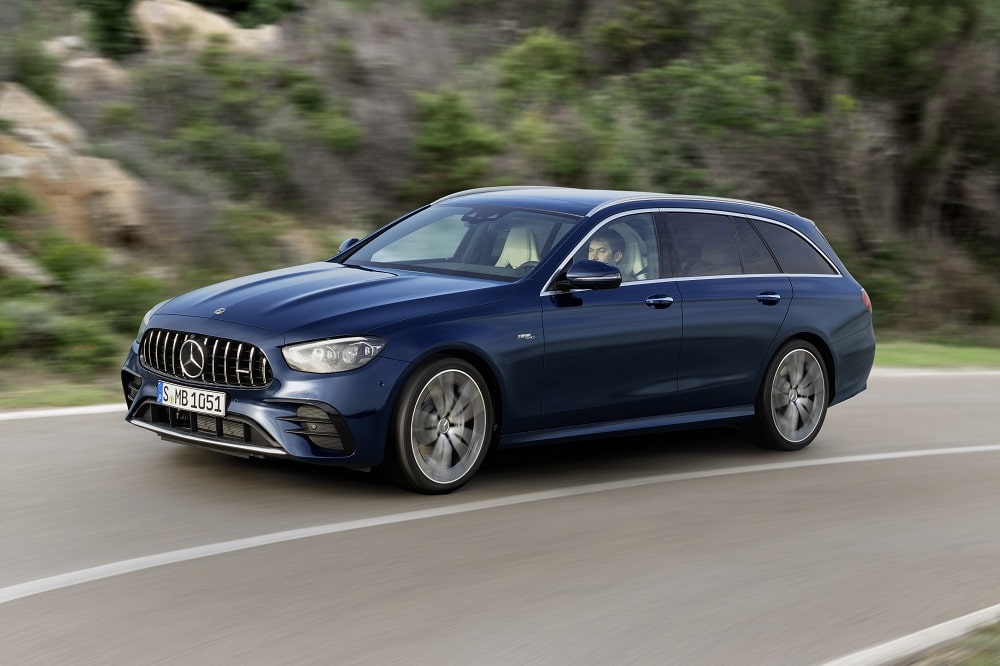
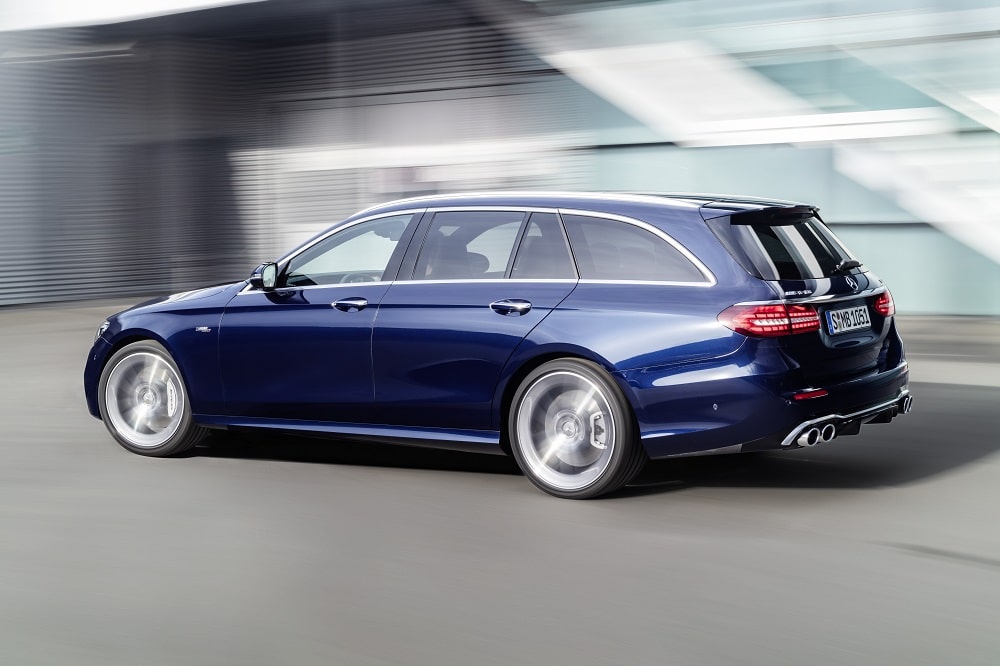
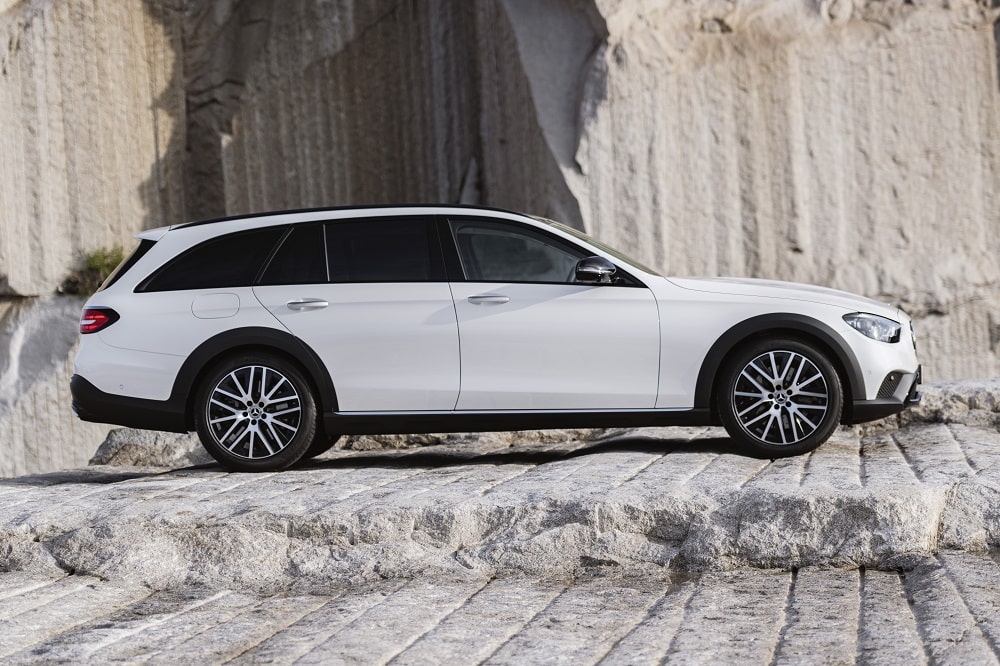
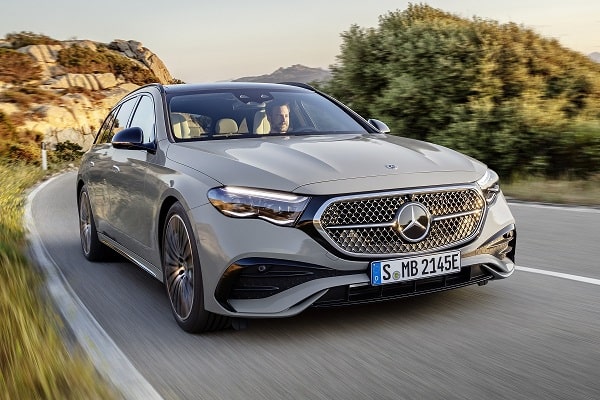
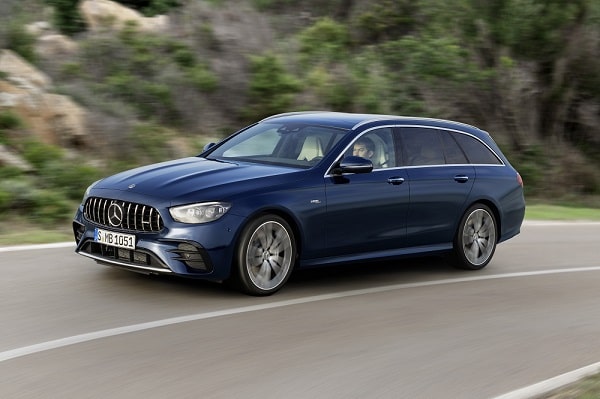
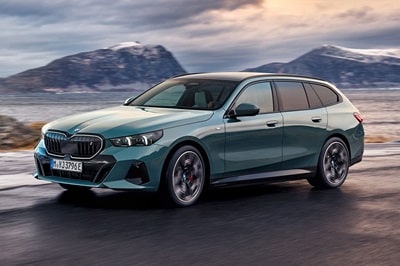
Discover all technical specifications of the Mercedes E-Class Estate from 2020, 2021, 2022 and 2023, including engines, performance, drivetrain, weight, fuel consumption figures and much more.
Specifications in detail: from engine to performance
Key specifications
-
Available as diesel, petrol, plug-in hybrid and plug-in hybrid
-
Power output from 160 to 435 hp (118 to 320 kW)
-
Maximum torque ranging from 320 Nm to 700 Nm
- 0 to 100 km/h acceleration in 4.5 seconds
- Top speed of 250 km/h
-
Choice between rear-wheel drive and all-wheel drive
General specifications
| Body type |
Estate |
| Available powertrains |
Diesel, petrol, plug-in hybrid, plug-in hybrid |
Drivetrain
| Maximum power |
160–435 hp / 118–320 kW |
| Maximum torque |
320–700 Nm |
| Gearbox |
Automatic |
| Driven wheels |
Rear-wheel drive or all-wheel drive |
Combustion engine
| Number of cylinders |
4 or 6 |
| Cylinder configuration |
Inline |
| Engine displacement |
1598 or 1950 or 1991 or 2925 or 2999 cc |
| Maximum power |
211 hp |
| Maximum torque |
400 Nm |
Electric motors
| Max power motor #1 |
122 hp |
| Max torque motor #1 |
440 Nm |
Battery
| Battery type |
Lithium-ion |
| Gross battery capacity |
13.5 kWh |
Performance
| Acceleration 0–100 km/h |
4.5–8.7 seconds |
| Top speed |
217–250 km/h |
Differences between versions
The engines and performance of the Mercedes E-Class Estate from 2020, 2021, 2022 and 2023 vary depending on the version. Below you will find the specific technical specifications.
More information